




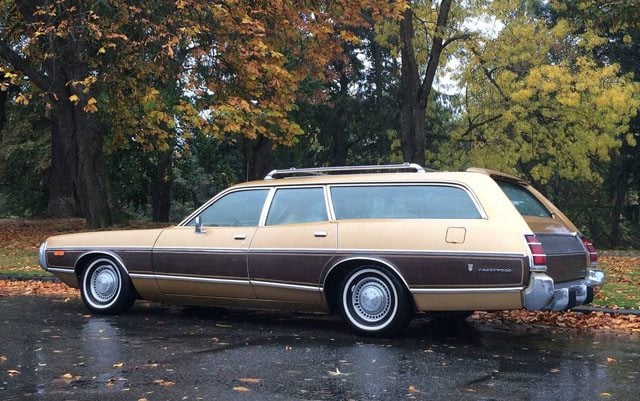
Ah, the station wagon. We all remember them. We’ve all seen them out in the wild. Maybe you’ve owned one (or several) or still do! Either way, over the years the station wagon evolved and still continues to influence the automotive industry. The history of the station wagon itself is pretty interesting and displays the way that society has a huge influence on what cars are manufactured.
It officially burst to the scene after World War Two. Prior to the second World War, the station wagon was very different from what it eventually became. During the war, they were custom-bodied vehicles that were built on a small scale by special shops. They were very expensive and were used for commercial purposes only. It goes back to the original meaning of the word wagon...a wagon to meet at the train station and take them to their hotel.
The station wagon is pretty caput by today’s standards but that doesn’t mean it won’t come back because it seems like eventually, everything does. The idea behind it was a multipurpose family car during the great Baby Boom after the war. It was a vehicle with where mom could haul a bunch of kids to school and dad could haul sheets of paneling for the basement rec-room. And yet, it was still suitable for taking your friends out on Saturday night. The arrival of the post-war wagon was an important event in the car world. It meant that there was a key turning point between the automobile and its owners. Americans wanted it all, and they still do.
Prior to the war, station wagons were not bought by most families. Eventually, the varnished wood-body paneled vehicles became the car of the rich. These woody wagons were more like trucks, and often built on lighter trucks or commercial chassis, and don’t even meet the definition of what became the modern wagon.
This kind of car was perfect for all types of suburban life. The idea of it really took off in the 50s and kept hold well into the 60s and 70s. After the gasoline crisis of the 1970s, the station wagon began to lose popularity because of several different reasons. The minivan design was becoming more practical and compact, and more gas efficient cars became more practical for many families. Eventually, front-wheel drive became increasingly more popular, and Sports Utility Vehicles were what people were seeking.
Although the future of the station wagon is uncertain, its body style may return one day. This type of vehicle offers more cargo room than a crossover and does not compromise handling. As people want a vehicle that can haul numerous passengers and cargo, the wagon may see a resurgence under a special niche.