




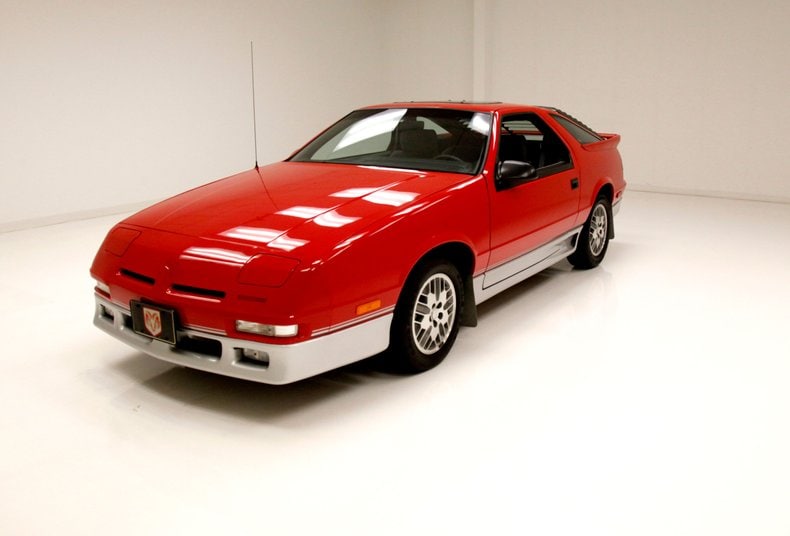
The Dodge Daytona...not to be confused with the trim level of a Dodge Charger Daytona. For its almost 10-year run, the Dodge Daytona was produced from 1984 until 1993 when it was eventually replaced with the Dodge Avenger.
It was a front-wheel drive hatchback based on the Chrysler G platform, which was derived from the “K Car” platform. The Daytona has a nod in its name from the Dodge Charger Daytona; this number was named after the Daytona 500 race that takes place in Daytona Beach, Florida. The Daytona name has strong ties with the Dodge and Chrysler brand and has been used several times since Dodge’s inception.
The Daytona originally used the 2.2 L Chrysler K engine in either naturally aspirated or the turbocharged form. But in 1985, the 2.2-L Turbo I horsepower was increased to 146 hp.
Originally, the first year 1984 Daytona was available in three different trim lines: standard, Turbo, and Turbo Z. Interestingly enough, The Daytona Turbo was on Car and Driver Magazine's 10 Best list in 1984. The Daytona was available with the Chrysler electronic voice alert system through 1987. Eventually, a performance "Shelby" version was introduced in 1987.
In 1986, there were several changes for the Daytona. The middle trim model was dropped, leaving only two models available; the base and Turbo Z. Engine changes were also made, including a new 2.5 L 100 hp four-cylinder engine for the base model. A new and exciting T-roof package was added to the option list as well! The biggest and probably best addition was the C/S (Carroll Shelby) suspension package, which was available only as an option on the Turbo Z. This package would foreshadow the Daytona Shelby that was produced in 1987 and beyond.
To reduce weight and produce a lighter Daytona, the C/S came without the ground effects and other features that were on the Shelby.
In 1989, the ES model was then introduced. It was an appearance package/equipment group offered on base models to attract the average Daytona buyer’s eye without a major price hike. However, the bigger downfall was this model was only available with a manual transmission.
Then in 1990, all Dodge Daytona's received a restyling inside with a modernized cockpit-style dashboard.
For the 1992 model year, production was moved from the Missouri plant to the Michigan plant. The Dodge Daytona also received a facelift and replaced the pop-up headlights with flush-mounted ones and added a new grille. The 1992 model also displayed the new Dodge "ram head" emblem on the hood and below the taillights.
The 1995 Dodge Avenger eventually took the Daytona's place after the last model was produced in 1993.
Daytona is still a huge name in the Dodge world and is used quite frequently; so the name has stood the test of time as a trim model option. There have been talks of many updates to the Dodge Daytona name, but until Dodge moves forward, the Daytona has been put to rest for the time being. Having somewhat of a cult following, Dodge Daytona’s are regularly seen on the road and at car shows.
If you’re ever on the lookout for any classic car, don’t skip us here at Schmit Bros. It isn’t unusual for us to get in some exciting classic inventory. Keep your eyes peeled and talk to your sales representative today!